
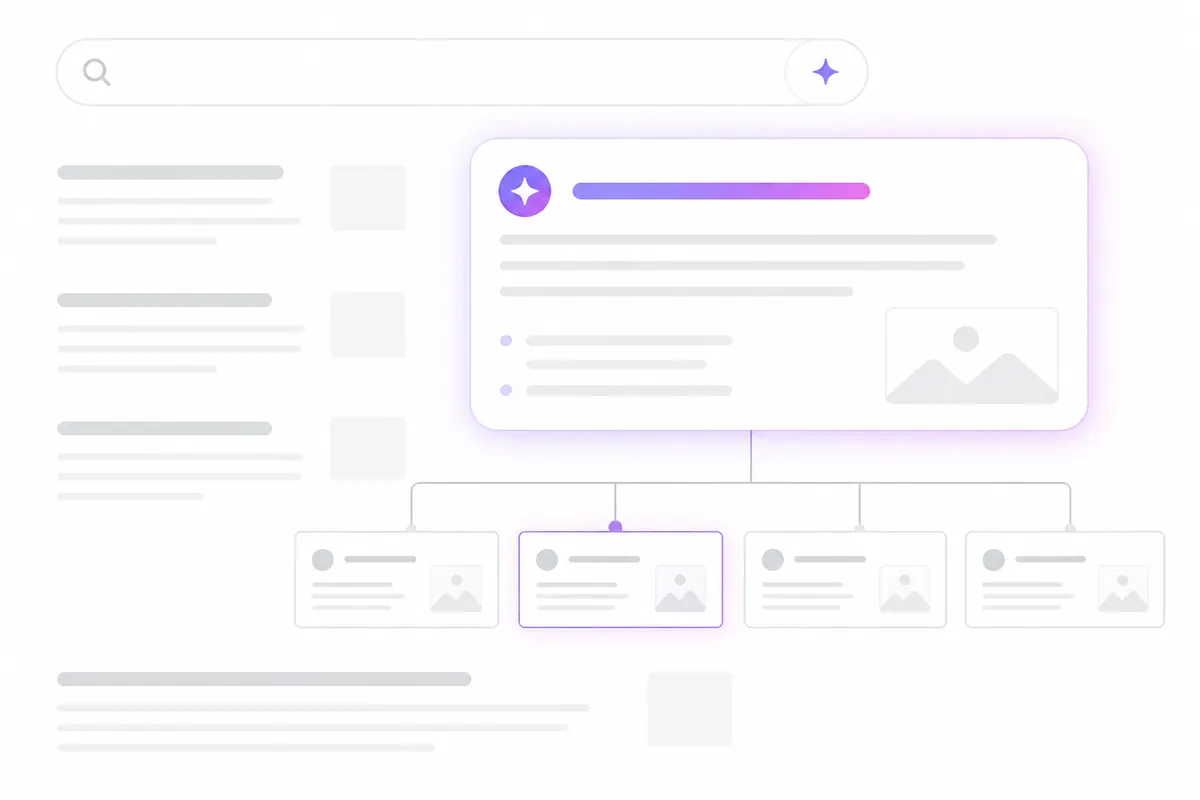
For many questions, Brave Search now writes a short AI answer at the top of the results page, before the normal links. Underneath, it lists the pages it used as sources. Being one of those sources puts your site above every organic result, with a link people can click.
Brave hasn’t published exactly how it chooses sources. But the answers are built from Brave’s own search index, and tests by search journalists found they mostly draw on pages that already rank well for the question. So the work is the same as for any AI answer engine: rank on Brave, and write pages that are easy to quote.
Step 1: be in Brave’s index and rank
An AI answer can only cite pages Brave already knows. Start with the basics in Brave Search SEO:
- let Googlebot crawl your pages, because Brave follows the same rules (why);
- give each page a clear title and description;
- earn links and real visitors, so Brave finds and trusts the page.
Step 2: answer the question in the first lines
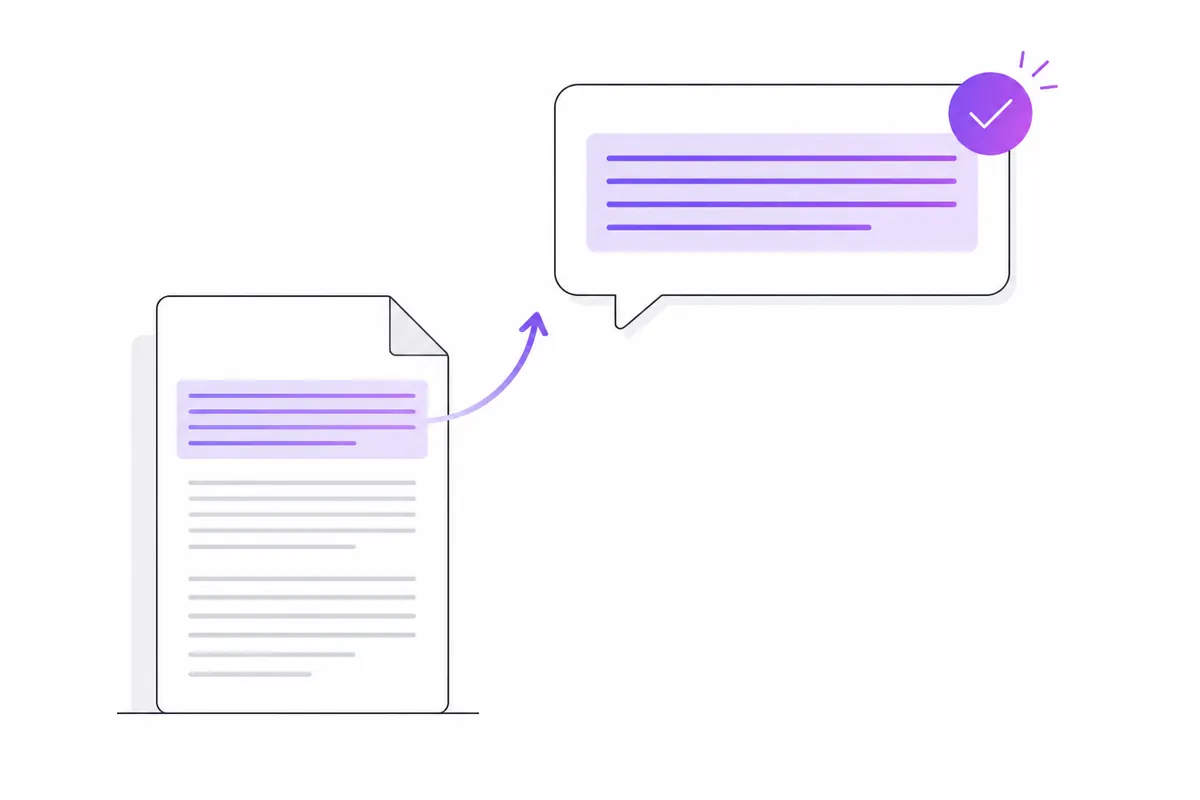
AI answers pull sentences that answer the question directly. Pages that bury the answer under a long introduction are harder to use.
- Put the answer first. If the page is about “how long does a passport renewal take”, the first paragraph should say how long, in plain words.
- One idea per paragraph. Short, self-contained paragraphs can be quoted on their own.
- Use the words people search for, in headings and in the first sentence of each section.
- Use lists and tables for steps, comparisons and numbers. They’re easy to lift into an answer.
Our guide on writing content AI assistants quote goes deeper; the same rules work for Brave.
Step 3: give facts that are worth citing
An answer engine needs a reason to name your page rather than another one saying the same thing. Pages get cited more when they have:
- specific facts: numbers, dates, prices, limits, names;
- first-hand experience: what you tested, measured or saw yourself;
- up-to-date information, with the date it was last checked;
- a clear author or organisation, so the source is easy to describe.
Step 4: keep the page technically clean
- One URL per page, with a canonical tag.
- Fast to load and readable without JavaScript, so the text is there when the page is fetched.
- Structured data for FAQs, how-tos, products and articles, which helps any engine understand what the page is.
How to see if Brave cites you
Search Brave for the questions your page answers and look at the sources listed under the AI answer. Do this for your most important questions once a month; answers change as the index changes.
In your own data, people who click a source link arrive from search.brave.com. Many of them use the Brave browser, which blocks most analytics scripts, so check your server-side numbers too. See Brave visitors and analytics.
Why this matters beyond Brave
Brave sells its search index to other companies through the Brave Search API, and AI assistants use it to search the web. A page that ranks well in Brave can be found by those tools as well. Read why Brave matters for AI assistants.
Check your own website
See which AI bots really visit your site — real or fake, page by page — and how many people AI assistants send you. Free.